Islamic Management Theory
The Prophet as manager
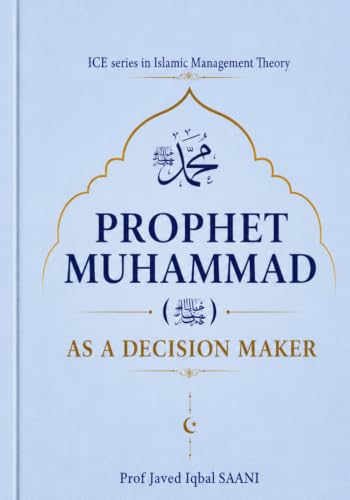
PROPHET MUHAMMAD (ﷺ) AS A DECISION MAKER
View this edition on AmazonPrinted and fulfilled by Amazon.
About this book
Book introduction
This book, Prophet Muhammad صلى الله عليه وسلم as a Decision Maker, examines decision-making through the life and practices of the Prophet Muhammad صلى الله عليه وسلم. The Prophet صلى الله عليه وسلم was not only the Messenger of Allah, but also the leader of a developing community, an educator, judge, negotiator, military commander, statesman, mediator, and administrator. He faced personal, social, political, religious, military, and institutional problems. Some required an immediate response. Others required consultation, patience, compromise, mediation, or deliberate delay. Certain decisions addressed an existing problem, while others anticipated future risks and created the foundations for long-term success.
The purpose of this work is to identify, organise and analyse these decisions from a contemporary management perspective. It does not suggest that the Seerah should be reduced to a modern business manual. Rather, it draws managerial and leadership lessons from selected incidents while respecting their religious and historical context. The book explores how the Prophet صلى الله عليه وسلم assessed situations, protected higher objectives, consulted his Companions, selected suitable alternatives, controlled escalation, built institutions and converted difficult circumstances into opportunities for learning and development.
The central argument of the book is that Prophetic decision-making was neither rigid nor impulsive. It combined obedience to revelation with wisdom, consultation, compassion, justice, foresight, and practical judgement. The Prophet صلى الله عليه وسلم chose ease where ease was lawful, but he did not compromise the mission or abandon established principles. He showed flexibility in matters where alternatives were permissible and firmness where fundamental values were at stake.
The book also demonstrates that decisions must be understood at several levels. Some are outcome-oriented, depending upon whether their intended benefits are anticipated, immediate, reactive, or mixed. Others are hierarchical, ranging from strategic decisions to tactical and operational choices. Decisions can also be classified according to time: short-term decisions control immediate events, medium-term decisions stabilise the organisation and build capability, while long-term decisions preserve the mission, establish institutions and create durable legitimacy.
Approach used in the book
A major feature of this work is its structured examination of problem-solving incidents. Where appropriate, each case is considered through a framework containing:
- The context or background of the problem
- The event that triggered the issue
- The response of the Prophet صلى الله عليه وسلم and other parties
- The resources required
- The tools and techniques applied
- The alternatives available
- The governing decision rule
- The solution adopted
- The managerial lesson derived from the incident